
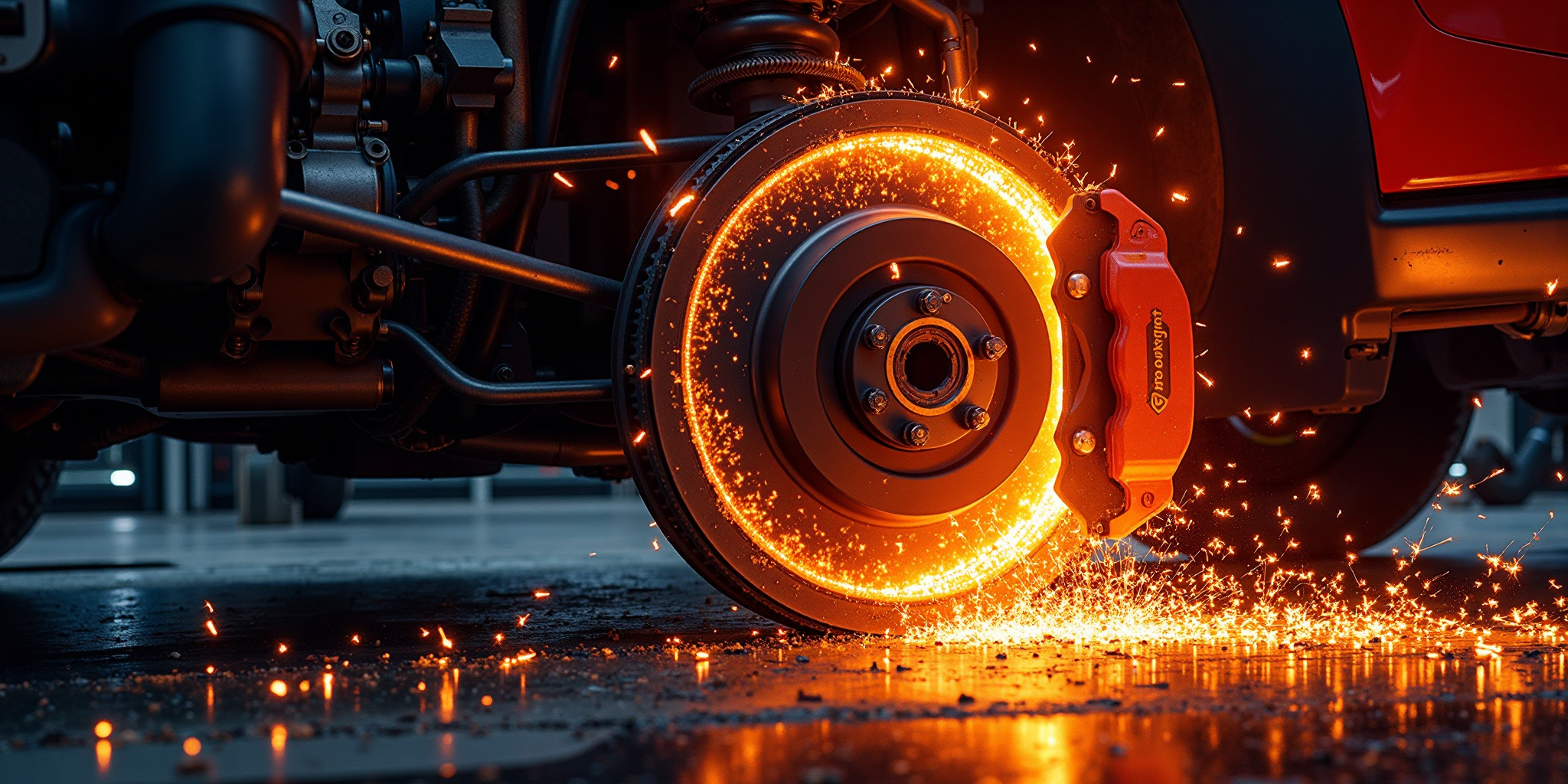
Case Study: Solving Heat Fading on Long Descents
A fleet operator running heavy tractor-trailers on long mountain descents reported brake fade and short lining life. This case walks through the complaint intake, the on-site diagnosis that traced the issue to a compound and friction-grade mismatch, the replacement specification, and the driver practices that keep temperatures under control.
The Complaint: Pedal Travel Growing on the Way Down
A distributor serving a fleet of heavy tractor-trailers in a hot, dry region forwarded a recurring complaint. Drivers reported that after several kilometres of continuous downhill running, the pedal began to feel long and the vehicle needed noticeably more distance to stop. Some units showed a burning smell at the wheels, and a few sets of brake shoes were pulled after only a fraction of the expected service interval. The distributor had already replaced shoes once with the same part number, and the problem returned on the same routes.
What made the report credible was the pattern: the complaint clustered on specific descents, not across the whole fleet. Flatland trucks with the same part number were running to normal wear limits. That pattern pointed away from a simple defective batch and toward an application mismatch.
Step 1 — Reconstructing the Duty Cycle
Before touching hardware, we asked for route data: gradient, length of descent, typical gross combination weight, ambient temperature, and whether trailers were loaded in both directions. The answer explained most of it. These were long, steep descents with the combination at or near maximum gross weight, in high ambient heat, and drivers were relying on the service brakes alone to hold speed. That is a continuous-energy input, not the intermittent stop-and-go duty a general-purpose lining is designed around.
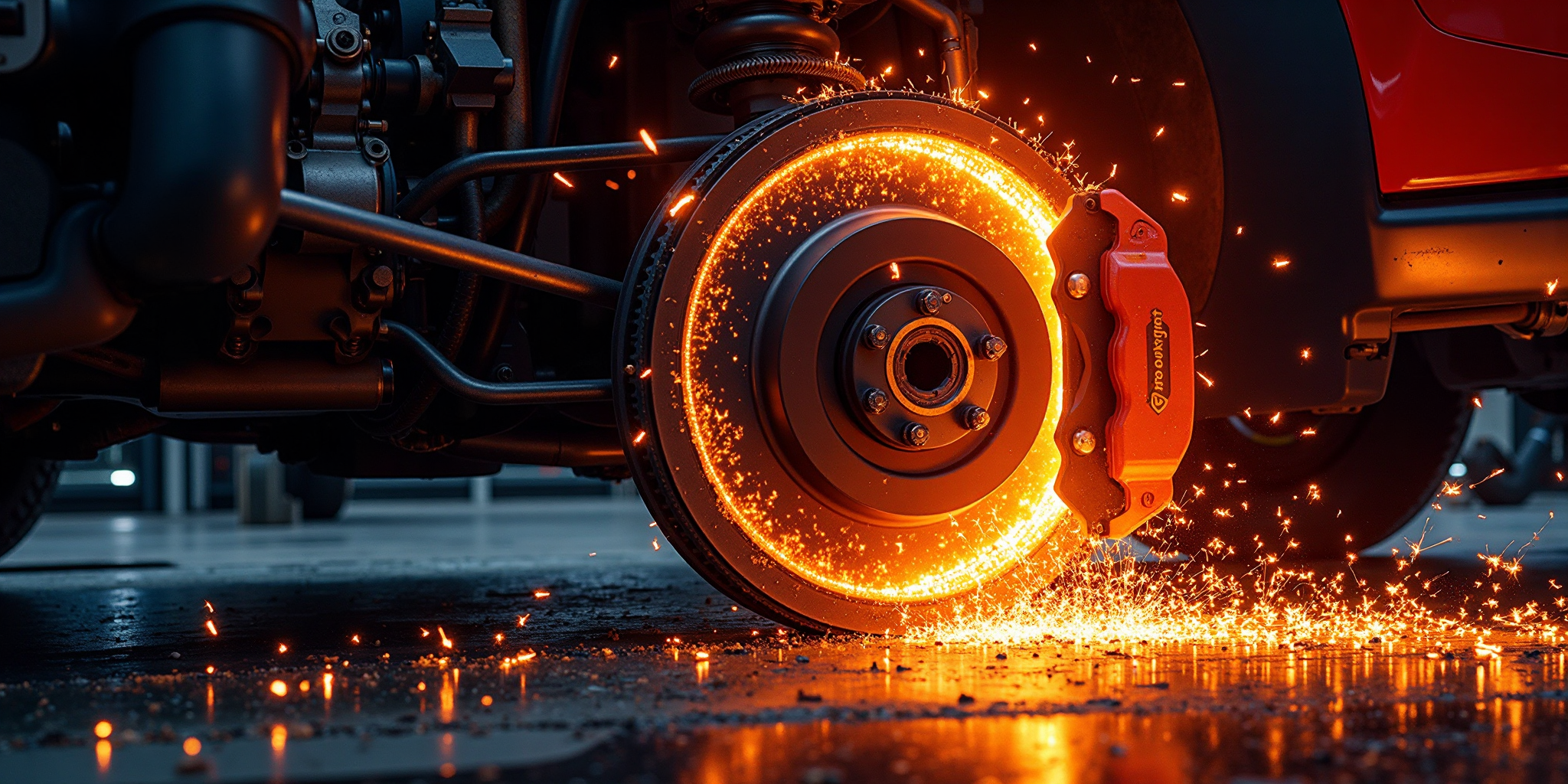
Sustained drag braking converts the descent into heat faster than the drum can shed it. Once the lining surface passes its working temperature range, the friction coefficient drops and the driver compensates with more pedal force and longer application — which adds more heat. The result is the classic fade spiral.
Step 2 — Inspecting the Returned Linings
We examined the returned shoes with the distributor. The friction material showed a glazed, polished surface with fine heat checking, and the wear pattern was concentrated toward the leading edge. Glazing is the visible signature of a lining that has been overheated and then cooled repeatedly. The drum surfaces showed bluing and light scoring consistent with high thermal load.
Crucially, the wear was not uneven in a way that suggested a mechanical fault. Slack adjusters were within range, drums were inside tolerance, and there was no evidence of oil contamination or a dragging brake. The hardware was doing its job; the friction material was being asked to do a job outside its design envelope.
Step 3 — The Diagnosis: Compound and Friction Grade Mismatch
The original lining was a general-service specification suited to moderate loads and intermittent braking. On a long descent with a fully loaded combination, that lining reached its thermal ceiling early. Two variables were mismatched to the application:
- Compound: the general-purpose mix did not hold friction at sustained high drum temperatures. It glazed and lost bite rather than wearing predictably.
- Friction grade: the nominal coefficient was adequate for normal service but had little reserve once temperature rose. A higher, more thermally stable grade gives the driver margin before fade begins.
The fleet had effectively been using a lining calibrated for flatland distribution work on a mountain route. No part number change within that family would have fixed it, which is why the first replacement failed the same way.
Step 4 — Selecting the Replacement Specification
We specified a heavy-duty, non-asbestos semi-metallic lining from our brake partner in the Gedian development zone, whose brake shoe and brake assembly production runs under an IATF16949 quality system. The compound is formulated for high-temperature, high-load duty and for exactly this kind of hot-climate, long-descent, heavy-load operating profile. Friction grade was raised to match the sustained energy input rather than the intermittent baseline.
The shoes were matched to the axle and drum dimensions already on the fleet, so no hardware modification was needed. Where the distributor needed documentation for its own customer, test reports were made available, and the order could be supplied in neutral packaging or under the distributor's own brand. A small trial batch went out first so the fleet could confirm behaviour on the actual route before committing the full set.

Step 5 — Installation and Bedding-In
Fitting followed standard practice: drums inspected and machined or replaced where scoring exceeded tolerance, new return springs and hardware where condition warranted, and a proper bed-in cycle before the units returned to full payload. Bedding-in transfers a thin, uniform transfer layer onto the drum, and skipping it on a high-friction lining can cause hot spots and noise in the first weeks. The distributor's workshop was given a short written bed-in procedure to apply to each unit.
Step 6 — Driver Guidance: Retarder and Gear
The strongest lining available will still fade if the descent is managed entirely on the brake pedal. The fix therefore included operating guidance for drivers:
- Use the engine retarder or exhaust brake as the primary speed control on long descents, and select a gear low enough that engine braking carries most of the load.
- Apply the service brakes in short, firm applications to bring speed down, then release, rather than holding light continuous pressure. Intermittent application lets the drum shed heat between inputs.
- Descend at a controlled speed from the top of the grade. Speed gained at the start is difficult and expensive to remove later.
- If pedal travel grows or the smell of hot friction material appears, stop in a safe place and let the brakes cool. Do not ride the pedal harder to compensate.
- After any hard descent, allow a cool-down period before parking with the brakes applied, to avoid heat soaking into the drum and lining.
Outcome and What It Shows
On the trial units, the fade complaint did not recur on the same routes once the heavy-duty lining and the revised descent technique were both in place. The distributor was able to standardise the specification for its mountain-route customers while keeping the general-purpose lining for flatland accounts.
The lesson for buyers is straightforward. Brake fade on long descents is usually an application problem before it is a product problem. Match the compound and friction grade to the real duty cycle — gradient, load, ambient heat, and how the driver actually uses the pedal — and document the operating guidance alongside the part. If you are sourcing brake shoes or brake assemblies for hot-climate, heavy-load markets, send us the route and load profile and we will confirm the right specification, test documentation, packaging, and trial-order arrangement.
Related Cases